



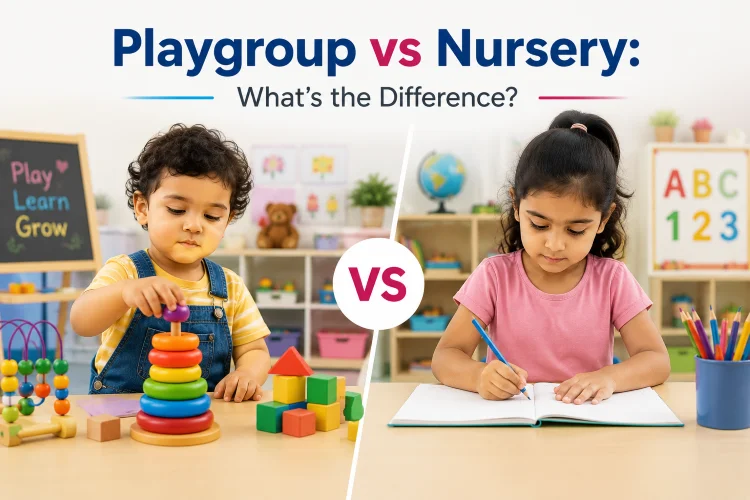
Playgroup vs Nursery: What’s the Difference?
Choosing the right starting point for your child’s early education can feel overwhelming, especially when terms like “Playgroup” and “Nursery” seem to be used interchangeably. If you’ve been searching for playgroup vs nursery and aren’t sure which one fits your child, this guide breaks down the differences in simple terms so you can make a confident decision.
What is Playgroup?
Playgroup is typically the very first step into structured early learning, designed for children around 18 months to 2.5 years old. At this stage, the focus isn’t on academics — it’s on helping toddlers get comfortable being away from home, interacting with other children, and following simple routines.
A typical Playgroup day includes:
- Sensory play and hands-on activities
- Basic social interaction with peers
- Simple songs, stories, and movement activities
- Short, supervised free play sessions
The goal of Playgroup is emotional readiness — building confidence, easing separation anxiety, and encouraging curiosity in a low-pressure environment.
What is Nursery?
Nursery follows Playgroup and is generally suited for children around 2.5 to 3.5 years old. This stage introduces slightly more structure while still keeping learning playful. Children begin recognizing patterns, numbers, letters, and colors through guided activities, without formal academic pressure.
A typical Nursery day includes:
- Introduction to alphabets, numbers, and shapes through play
- Group activities that build teamwork and sharing
- Storytelling with early comprehension skills
- Creative activities like drawing, craft, and music
Nursery acts as a bridge between playful exploration and the more structured learning that comes later in Kindergarten.
Playgroup vs Nursery: Key Differences
| Aspect | Playgroup | Nursery |
|---|---|---|
| Age Group | 18 months – 2.5 years | 2.5 – 3.5 years |
| Main Focus | Social & emotional readiness | Early cognitive & pre-academic skills |
| Structure | Minimal, mostly free play | Slightly structured, activity-based |
| Duration | Shorter sessions | Longer sessions |
| Learning Style | Sensory and social | Guided, playful introduction to concepts |
Understanding this playgroup vs nursery comparison can help you set the right expectations for your child’s first year of early learning.
Playgroup vs Nursery: Which One Is Right for Your Child
If your child is younger, hasn’t been in a group setting before, or needs time adjusting to being away from a parent, Playgroup is the right starting point. If your child is a little older, already comfortable in social settings, and shows curiosity toward letters, numbers, or stories, Nursery may be the better fit.
Every child develops at their own pace, so age is a guideline — not a strict rule. Observing your child’s comfort level in group settings is often the best indicator when deciding between playgroup and nursery.
How EuroKids Pahala Approaches Playgroup vs Nursery
At EuroKids Pahala, both Playgroup and Nursery are designed around age-appropriate, play-based learning that supports each child’s natural development. Our experienced educators create a warm, supportive environment where children transition smoothly from one stage to the next, building confidence, curiosity, and foundational skills along the way.
Whether your child is ready for Playgroup or Nursery, our team can help you identify the right starting point based on their individual needs.
Ready to Enroll in Playgroup or Nursery?
If you’re still deciding between playgroup and nursery for your child, our team at EuroKids Pahala is happy to guide you. Visit our Admission Page to learn more about enrollment, or contact us to schedule a visit and see our classrooms in person. You can also follow EuroKids Pahala on Instagram for updates on our latest activities and events.