




Preschool Readiness Checklist: Is Your Child Ready for Preschool?
Starting preschool is an important milestone for both children and parents. If you’re considering preschool admission in Pahala or Bhubaneswar, you may be wondering — is my child ready for preschool? While age is one factor, preschool readiness is about much more than simply reaching a certain birthday.
Every child develops at their own pace. Some children are excited to meet new friends and explore a classroom, while others may need more time to become comfortable away from their parents. Understanding your child’s social, emotional, communication, and self-help skills can help you decide when they are ready to begin their preschool journey.
At EuroKids Pahala, we understand that every child is unique. This preschool readiness checklist can help parents identify some of the skills that can make the transition to preschool easier and more comfortable. This preschool readiness checklist covers the key social, emotional, communication, and self-help skills parents can look for before their child begins preschool. Use it as a simple guide rather than a test that your child must pass.
What Does Preschool Readiness Mean?
Preschool readiness means having some basic developmental and everyday skills that help a child participate comfortably in a preschool environment. It does not mean that your child needs to know how to read, write, or count before joining preschool.
Instead, readiness includes simple abilities such as communicating basic needs, following simple instructions, interacting with other children, participating in activities, and gradually becoming comfortable with routines.
A good preschool provides opportunities for children to develop these skills through age-appropriate activities, play, storytelling, group activities, and guided learning.
Preschool Readiness Checklist for Parents
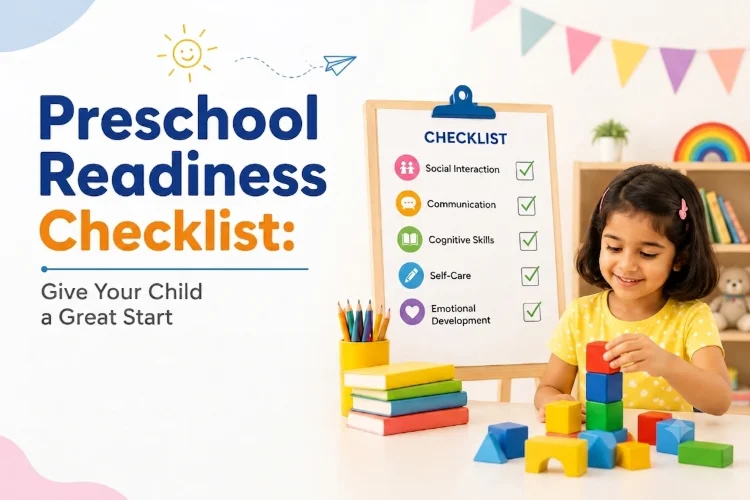
Before your child starts preschool, use this preschool readiness checklist to look at the skills they are gradually developing. Your child does not need to be perfect in every area. The checklist is simply a helpful guide to understand their current level of readiness and identify areas where they may need more practice.
| Readiness Skill | What Your Child May Be Able to Do |
|---|---|
| Communication | Express basic needs, wants, and feelings using words or simple sentences |
| Following Instructions | Understand and follow simple one- or two-step instructions |
| Social Skills | Play alongside or interact with other children and begin sharing |
| Emotional Readiness | Separate from parents for a short period with increasing confidence |
| Self-Help Skills | Attempt simple tasks such as eating, drinking, washing hands, or putting away toys |
| Attention & Participation | Stay engaged in a short story, song, game, or classroom activity |
| Following Routines | Become comfortable with simple routines such as arrival, activity time, meals, and cleanup |
1. Can Your Child Communicate Their Basic Needs?
Communication is one of the most useful skills for a child entering preschool. Your child should gradually be able to communicate simple needs such as wanting water, needing help, feeling uncomfortable, or wanting to use the toilet.
They do not need advanced language skills. Being able to use words, gestures, or simple sentences to communicate with teachers and caregivers can help them feel more confident in a new environment.
Parents can encourage this by talking to their child regularly, asking simple questions, reading stories together, and giving them opportunities to express their choices.
2. Can Your Child Follow Simple Instructions?
Preschool involves many simple classroom instructions throughout the day. Children may be asked to sit in a particular place, put their toys away, join a group activity, or follow a teacher’s directions.
Your child does not need to follow every instruction perfectly before starting preschool. However, being able to understand and respond to simple instructions can make the transition easier.
At home, parents can practice through everyday activities such as asking their child to put a toy away, bring a book, wash their hands, or place something in its proper location.
3. Is Your Child Comfortable Around Other Children?
Preschool gives children regular opportunities to interact with their peers. Your child may need to share toys, wait for their turn, participate in group activities, and learn how to interact with children of a similar age.
Your child does not need to be highly social before starting preschool. Even if they are shy or prefer playing independently, regular exposure to other children can gradually help develop their social confidence.
play dates, family gatherings, playground visits, and group activities can help your child become more comfortable interacting with others.
4. Can Your Child Handle Short Separations?
One of the biggest concerns for parents is separation anxiety when starting preschool. It is completely normal for some children to feel upset when their parents leave them in a new environment.
A child who can gradually spend some time away from parents or familiar caregivers may find the transition easier. However, occasional crying or hesitation does not automatically mean your child is not ready for preschool.
Parents can prepare their child by starting with short separations and explaining what will happen when they leave and when they return. Keeping goodbye routines calm and positive can also help build confidence.
5. Is Your Child Developing Self-Help Skills?
Preschool is also a time when children become more independent. Simple self-help skills can make their daily classroom experience easier.
Depending on their age, your child can gradually learn to:
• Eat and drink with increasing independence
• Wash and dry their hands
• Put toys or materials away
• Remove or wear simple items of clothing with help
• Tell an adult when they need help
• Attempt basic personal-care routines
The goal is not complete independence. Preschool teachers understand that young children still need guidance and support.
6. Can Your Child Participate in Short Activities?
Preschool children are not expected to sit still for long periods. Instead, they gradually learn to participate in short activities such as stories, songs, puzzles, drawing, sensory play, and group games.
If your child can stay engaged with an activity for a few minutes and gradually move from one activity to another, they are developing an important preschool readiness skill.
At home, parents can encourage this through reading short stories, coloring, puzzles, building blocks, and simple educational games.
7. Can Your Child Follow a Simple Daily Routine?
Children often feel more comfortable when they know what to expect. A simple daily routine can help prepare your child for the structure of preschool.
Parents can establish routines for waking up, getting dressed, eating breakfast, playing, reading, and going to bed. A consistent routine can help children understand transitions and prepare them for the daily rhythm of preschool.
At euro kids Pahala, children participate in age-appropriate routines and activities that encourage learning, independence, communication, and social development.
Does Your Child Need to Know ABCs and Numbers Before Preschool?
No. Your child does not need to master the alphabet, writing, reading, or advanced numbers before starting preschool.
Early childhood education is designed to help children gradually develop these foundational skills. What matters more is that your child is developing curiosity, communication, social interaction, motor skills, independence, and the ability to participate in age-appropriate activities.
Parents can support early learning naturally through reading books, singing rhymes, counting everyday objects, drawing, coloring, and talking about the world around them.
How Parents Can Prepare a Child for Preschool
If your child is getting ready for preschool, a few simple activities at home can make the transition easier.
• Create a predictable routine: Keep waking, meals, playtime, and bedtime reasonably consistent.
• Encourage independent tasks: Let your child try simple activities instead of doing everything for them.
• Read together: story time can support language development, listening skills, and attention.
• practice social interaction: Give your child opportunities to play with other children.
• Talk positively about preschool: Explain what your child can expect without creating unnecessary pressure.
• Visit the preschool: If possible, let your child see the classroom and become familiar with the environment before joining.
Preschool Readiness: Age Is Only One Factor
Age can help parents understand when preschool may be appropriate, but it is not the only measure of readiness. Children develop at different speeds, and two children of the same age may have very different personalities, communication abilities, and levels of independence.
Instead of asking only, “What is the right age for preschool?”, parents can also ask, “What skills is my child developing, and how can preschool support the next stage?”
A supportive preschool environment can help children continue developing their social, emotional, communication, physical, and early learning skills.
Why Choose a Supportive Preschool Environment?
The transition to preschool becomes easier when children feel safe, welcomed, and supported. A quality preschool should provide age-appropriate learning experiences while allowing children time to explore, play, communicate, and build relationships.
At EuroKids Pahala, our early learning environment focuses on helping children develop through structured activities, play-based experiences, social interaction, and age-appropriate learning.
Parents looking for a preschool in Pahala can explore our programs and understand how we support children during their early learning journey.
Questions Parents Often Ask About Preschool Readiness
How do I know if my child is ready for preschool?
Look at your child’s communication, social interaction, emotional comfort, independence, ability to follow simple instructions, and participation in short activities. Remember that children develop these skills at different rates.
What age should a child start preschool?
The appropriate age can vary depending on the preschool program and the child’s individual development. Parents should consider both age and developmental readiness when choosing a program.
Does my child need to be able to read before preschool?
No. Preschool is designed to introduce children to early literacy, numeracy, communication, and other foundational skills in an age-appropriate way.
What if my child cries on the first day of preschool?
Crying or feeling nervous during the first few days can be normal. A new classroom, new teachers, and separation from parents can take time to become familiar. A calm goodbye routine and consistent support can help children adjust.
How can I prepare my child for their first day of preschool?
Start building simple routines at home, encourage independence, talk positively about preschool, read books together, and give your child opportunities to interact with other children.
Is Your Child Ready for Preschool?
This preschool readiness checklist can help you think about your child’s communication, social, emotional, and self-help skills before making a preschool decision. Remember that readiness develops gradually, and children may need different levels of support. There is no single checklist that can perfectly determine whether every child is ready for preschool. The goal is to understand your child’s current abilities and choose an environment where they can continue learning and developing with confidence.
If you’re looking for a preschool in Pahala or Bhubaneswar, the team at EuroKids Pahala can help you understand our programs and find an option that suits your child’s age and developmental needs.
Visit our Contact Us page to schedule a visit, or explore our preschool programs to learn more. You can also follow our classroom activities and updates on Instagram and Facebook.