




UKG Full Form: Meaning, Age, Syllabus & UKG vs LKG
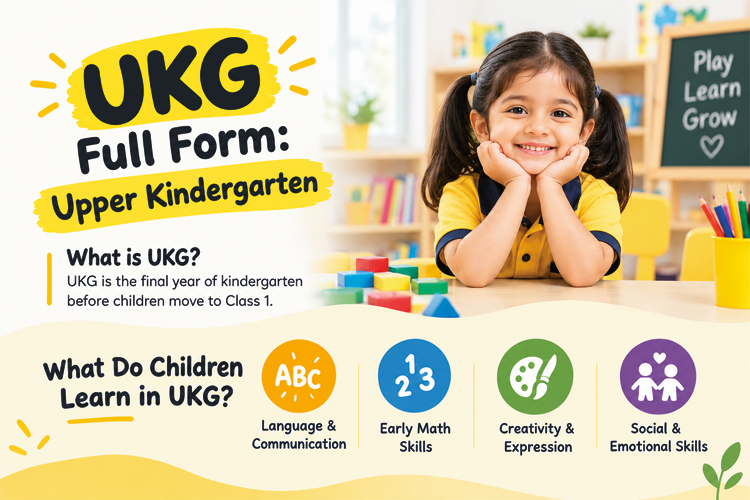
UKG full form is Upper Kindergarten. It is the later kindergarten stage that generally comes after LKG, or Lower Kindergarten, and before primary school. During this stage, children continue developing language, early numeracy, communication, social, creative and motor skills through age-appropriate learning activities.
For parents exploring kindergarten admission in Bhubaneswar, understanding the age requirements, curriculum, learning activities and differences between kindergarten stages can make choosing a preschool easier.
What Is the Full Form of UKG?
The UKG full form is Upper Kindergarten.
It is a kindergarten stage designed to help children build on the foundations developed during earlier preschool years. Children continue learning through stories, rhymes, games, creative activities, conversations, numbers, letters and hands-on experiences.
UKG stands for Upper Kindergarten, while LKG stands for Lower Kindergarten. In many schools, the former comes after the latter, although the exact class structure and admission criteria can vary between schools. To understand the earlier stage, you can read our guide on the LKG full form.
What Does UKG Mean in Education?
In education, Upper Kindergarten is the final kindergarten stage before primary school in many Indian schools. Children continue developing foundational skills that support future academic learning, communication and social interaction.
This stage is not only about reading and writing. Children also get opportunities to develop:
- Communication and vocabulary
- Early reading and writing skills
- Counting and early numeracy
- Fine and gross motor skills
- Social interaction and cooperation
- Creativity and imagination
- Listening and following instructions
- Independence and confidence
Age-appropriate activities help children practise these skills naturally while becoming more comfortable with classroom routines.
What Is the UKG Age?
The eligible age for Upper Kindergarten depends on the school’s admission policy and academic year. In many Indian schools, children in this stage are around 4 to 5 years old.
However, parents should always check the specific age eligibility of the school they are considering because admission cut-off dates and age requirements can differ.
India’s National Education Policy 2020 identifies ages 3 to 8 as part of the foundational stage of education, highlighting the importance of early childhood learning.
For families planning admission in Bhubaneswar, checking the school’s eligibility criteria before applying can help avoid confusion about age requirements.
What Do Children Learn in UKG?
The UKG syllabus generally builds on foundational concepts and introduces more structured learning while keeping activities appropriate for young children.
Children may explore language, numbers, shapes, stories, music, movement, creative activities and social interaction.
| Learning Area | What Children May Practise |
|---|---|
| Language | Phonics, letter sounds, simple words, sentences and conversation |
| Early Maths | Counting, number recognition, simple addition and subtraction with objects, shapes and patterns |
| Fine Motor Skills | Pencil grip, tracing, writing practice, drawing and craft activities |
| Social Skills | Sharing, taking turns, teamwork and communication |
| Creative Learning | Art, music, storytelling and imaginative play |
| Physical Development | Movement, balance, coordination and age-appropriate physical activities |
The exact curriculum and classroom activities can differ between schools.
UKG Syllabus: What Subjects Are Included?
Parents often check the kindergarten curriculum before admission. Although subjects vary between schools, children typically practise language, early mathematics, environmental awareness and creative activities.
1. English and Language Development
Children can strengthen their language skills through:
- Alphabet recognition and writing practice
- Phonics and letter sounds
- Reading simple words
- Common sight words
- Forming short, simple sentences
- Rhymes, songs and storytelling
- Listening and speaking activities
2. Early Mathematics
Early maths activities can introduce or reinforce:
- Counting and number recognition
- Writing numbers
- Simple addition and subtraction with objects
- Shapes and patterns
- Sorting and matching
- Before, after and in-between
- Simple ideas of time and measurement
3. Environmental Awareness
Children can learn about the world around them through age-appropriate topics such as:
- Family and community helpers
- Animals and plants
- Seasons and weather
- Food and healthy habits
- Our body and senses
- Everyday objects and safety
4. Art, Music and Creative Activities
Drawing, colouring, music, dance, craft and pretend play can encourage children to express their ideas, explore their interests and develop creativity.
7 Essential Skills Children Build in UKG
This stage can support several areas of early childhood development.
- Language and early literacy: Phonics, reading simple words and forming sentences
- Early numeracy: Counting, number sense, shapes and basic problem-solving
- Fine motor skills: Pencil control, tracing, drawing and writing readiness
- Social skills: Sharing, cooperation and taking turns
- Emotional development: Expressing feelings and building confidence
- Creativity: Art, music, storytelling and imaginative play
- Focus and independence: Following routines, completing tasks and managing belongings
These abilities provide a foundation for continued learning as children move towards primary school.
UKG vs LKG: What Is the Difference?
One common question parents ask is how the two kindergarten stages differ.
UKG means Upper Kindergarten, while LKG means Lower Kindergarten. In many school structures, LKG comes first, followed by UKG.
| Feature | LKG | UKG |
|---|---|---|
| Full Form | Lower Kindergarten | Upper Kindergarten |
| Stage | Earlier kindergarten stage | Later kindergarten stage |
| Learning Focus | Foundational concepts and routines | Building on previously developed skills |
| Language | Letters, sounds, vocabulary and communication | More developed reading and writing readiness |
| Maths | Basic counting, numbers, shapes and patterns | Further development of early numeracy concepts |
| School Readiness | Developing classroom participation and independence | Further preparation for primary school |
The exact curriculum and progression can vary depending on the school and the child’s learning needs.
How Does This Stage Prepare Children for Class 1?
The move from preschool to primary school can feel like a big change for young children. A well-planned kindergarten year can help them become more comfortable with the habits and skills they may need in Class 1.
Children may become more confident in:
- Sitting and focusing for longer periods
- Following multi-step instructions
- Reading and writing at a basic level
- Working independently on small tasks
- Asking questions and sharing ideas
- Managing their own tiffin, bag and daily routines
NCERT also publishes foundational-stage learning resources for young children. Every child develops at their own pace, so the goal should be to encourage confidence and curiosity rather than put pressure on academic performance.
What Should a Child Know Before Starting UKG?
Children do not need to master an academic syllabus before moving up. Parents can help by supporting simple everyday skills and routines.
Before starting this stage, children may benefit from practising:
- Recognising familiar letters and numbers
- Holding a pencil and attempting to write
- Following simple two- or three-step instructions
- Expressing needs and ideas in words
- Playing and sharing with other children
- Staying with a task for a few minutes
- Managing small tasks independently
If some of these skills are still developing, that is perfectly normal. Our preschool readiness checklist can help you understand which skills your child may need to practise.
How Can Parents Prepare Their Child for UKG?
Simple preparation at home can make the transition smoother and more enjoyable.
Read Together Every Day
Even 10 to 15 minutes of storytime can build vocabulary, listening skills and a love of books.
Count in Daily Life
Count steps, fruits, toys or cars on the road. Everyday counting makes numbers feel natural and fun.
Keep Writing Playful
Let your child trace letters in sand, draw pictures or write their name on a card. Short, playful practice works better than long sessions.
Build a Simple Routine
Regular times for sleep, meals, play and school preparation can help children feel secure and organised.
Encourage Independence
Let your child pack their bag, open their own tiffin and tidy their desk with age-appropriate support.
Balance Screen Time
Age-appropriate screen-time limits can help leave enough time for sleep, physical activity, conversation and creative play. Puzzles, drawing, outdoor games and storytelling are useful alternatives to recreational screen time.
For more ideas, see our post on fun learning activities to do at home.
UKG Admission in Bhubaneswar: What Parents Should Check
Parents searching for kindergarten admission in Bhubaneswar can compare schools based on several practical factors before choosing a programme.
Consider checking:
- Age eligibility and admission criteria
- Curriculum and learning approach
- Teacher-child interaction
- Classroom environment
- Safety and hygiene practices
- Learning activities and play opportunities
- School timings
- Parent communication
- Location and travel convenience
- Available preschool programmes
- Admission process and documentation
For families living around Pahala, Rudrapur and nearby areas of Bhubaneswar, choosing a preschool that is convenient to reach can also make the daily school routine easier for children and parents.
UKG Learning at EuroKids Pahala
For parents looking for kindergarten education in Pahala, Bhubaneswar, EuroKids Pahala offers the EuroSenior programme, designed to support children at this stage of early learning.
Learning follows the HEUREKA curriculum and the principles of play-based learning, allowing children to build skills through activities, stories, music and exploration.
Parents can explore the available preschool programs in Bhubaneswar and learn more about the programme through our kindergarten admission page.
Frequently Asked Questions About UKG
What is the UKG full form?
The UKG full form is Upper Kindergarten. It is the later kindergarten stage that generally comes after LKG.
What does UKG stand for in education?
It stands for Upper Kindergarten. Children at this stage build on foundational language, numeracy, social and motor skills before moving to primary school.
What is the UKG age?
Children in this stage are commonly around 4 to 5 years old in many Indian schools. However, exact eligibility varies by school and academic year.
What is taught in UKG?
Children may practise phonics, reading simple words, writing, early maths, environmental awareness, creative activities, storytelling, music, movement and social interaction.
What is the difference between UKG and LKG?
LKG means Lower Kindergarten and generally comes first. UKG means Upper Kindergarten and usually builds on the concepts and skills developed during the earlier stage, with further emphasis on reading, writing and school readiness.
Is UKG compulsory before Class 1?
Requirements depend on applicable school admission rules and education regulations. Many schools use kindergarten stages to help children develop foundational skills before primary school, so parents should confirm the current eligibility requirements with their chosen school.
Should my child read and write before starting UKG?
Not necessarily. Structured reading and writing practice continues during this stage. Basic communication, curiosity and comfort in a classroom are also important.
How can I find a UKG school in Bhubaneswar?
Compare schools based on location, age eligibility, curriculum, learning environment, safety, programmes and admission procedures. Families in Pahala can also explore nearby preschool options and visit the centre before making a decision. You can read our preschool FAQs for more answers.
Explore Preschool and UKG Programs in Bhubaneswar
Understanding your child’s age, developmental stage and learning needs can help you explore suitable preschool programmes.
EuroKids Pahala offers programmes for different stages of early childhood learning. Parents can explore our preschool programs in Bhubaneswar or learn more about individual programmes:
Playgroup | Nursery | LKG | UKG
Parents can also learn more about EuroKids Pahala through our About Us page.
Preparing Your Child for a Confident Start in Class 1
Upper Kindergarten represents an important stage in a child’s early learning journey. It can help children build on earlier learning, strengthen language and early numeracy, develop social and creative skills, and become more comfortable with school routines through age-appropriate experiences.
For parents exploring kindergarten admission in Bhubaneswar, it is useful to compare age criteria, teaching methods, classroom environments, safety practices, programmes and location before making an admission decision.
If you are looking for preschool education near Pahala, Bhubaneswar, explore the EuroKids Pahala preschool programs or visit our Contact Us page to enquire about admission, programmes or a school visit.
You can also follow EuroKids Pahala on Instagram and EuroKids Pahala on Facebook for activities, celebrations and school updates.
“`